
Key facts
- Jason Ronald said game preservation is core to Xbox and that Microsoft feels a deep responsibility as one of the industry's biggest platforms and publishers to protect gaming history as hardware changes.
- Microsoft plans for Project Helix to support games and progression from four generations of Xbox consoles, including original Xbox, Xbox 360, Xbox One, and Xbox Series X|S.
- Microsoft describes Project Helix as a family of next-generation devices rather than a single console, with a handheld expected for holiday 2027 and the console for 2028.
- Microsoft is focusing on neural rendering to deliver visual fidelity more efficiently rather than chasing traditional metrics like 8K resolution or 240 hertz frame rates.
Xbox Vice President of Next Generation Jason Ronald said backwards compatibility and game preservation inform how Microsoft designs Project Helix and works with partners, so older games run better than ever before, speaking in an interview for the Xbox 25th Anniversary magazine published Nov. 16, 2026.
Ronald called game preservation core to Xbox and said Microsoft feels a deep responsibility as one of the industry’s biggest platforms and publishers to protect gaming history as hardware changes. He noted that during the first 30 years of game development, preservation was not considered in hardware or game design. He said older games have recently become more accessible to console gamers. Ronald said, “game preservation is core to Xbox.”
He said preservation work from the past is shaping current platform design, so games remain playable 20 to 30 years in the future. Backward compatibility is a cornerstone of Microsoft’s strategy.
Microsoft plans for Project Helix to support games and progression from four generations of Xbox consoles, including original Xbox, Xbox 360, Xbox One, and Xbox Series X|S. Players can bring four generations of their Xbox library and progression to the new hardware and have it available instantly, Ronald said.
Ronald described Project Helix as a console capable of playing PC games, not a PC that can also play console games. Ronald said, “It is not a PC that can also play console games.” Microsoft announced at GDC 2026 that its next console would play both Xbox and PC games. Ronald said the goal is instant, intuitive game access with deeper settings available for power users.
Microsoft describes Project Helix as a family of next-generation devices rather than a single console, with a handheld expected for holiday 2027 and the console for 2028. Ronald said Helix refers to a couple of machines. Digital Trends cited a profile of Xbox chief Asha Sharma in reporting the 2027 handheld and 2028 console timeline.
Beebom reported that Microsoft plans to send early Project Helix hardware to developers in 2027, while the official release date, pricing, and final launch lineup remain unannounced. Ronald would not confirm price or release date. Few official Project Helix details have been revealed beyond Asha Sharma calling it a family of devices.
A report cited by Digital Trends said Project Helix has been internally projected to cost consumers between $1,200 and $1,800 unless Microsoft subsidizes the cost or sells at a loss. The price projection came from a Fortune report cited by Digital Trends. Microsoft sold Xbox consoles at a loss for years as of 2021, and the company absorbed hardware costs in hopes of recouping money through services. Memory costs surged in 2026 because of the AI boom.
Digital Trends framed these reports as part of broader pricing pressure on next-generation hardware.

Beebom reported that rising memory and component costs driven by the AI boom are making gaming hardware more expensive, forcing Microsoft to balance technological improvements with affordability. The outlet also reported that Ronald acknowledged the ongoing component crisis.
Digital Trends said Apple has also raised prices. Sony is reportedly struggling with PlayStation 6 development, with rumors suggesting it will cost more than $1,000, and analysts predict possible next-generation delays until memory prices fall. The outlet also reported that some analysts predict Microsoft and Sony could delay consoles while waiting for memory prices to come down.
Microsoft is focusing on neural rendering, a technique that uses AI to improve image quality efficiently, to deliver visual fidelity more efficiently rather than chasing traditional metrics like 8K resolution or 240 hertz frame rates. Jason Ronald said the next generation is defined by gameplay innovation and deeper immersion rather than 8K, 240 hertz, or other traditional metrics. He said he is excited about entirely new types of games made possible by innovation in silicon, hardware, and the platform. Ronald said “I think you’re going to see more innovation over the next three to five years than you’ve seen in the last 10 years”
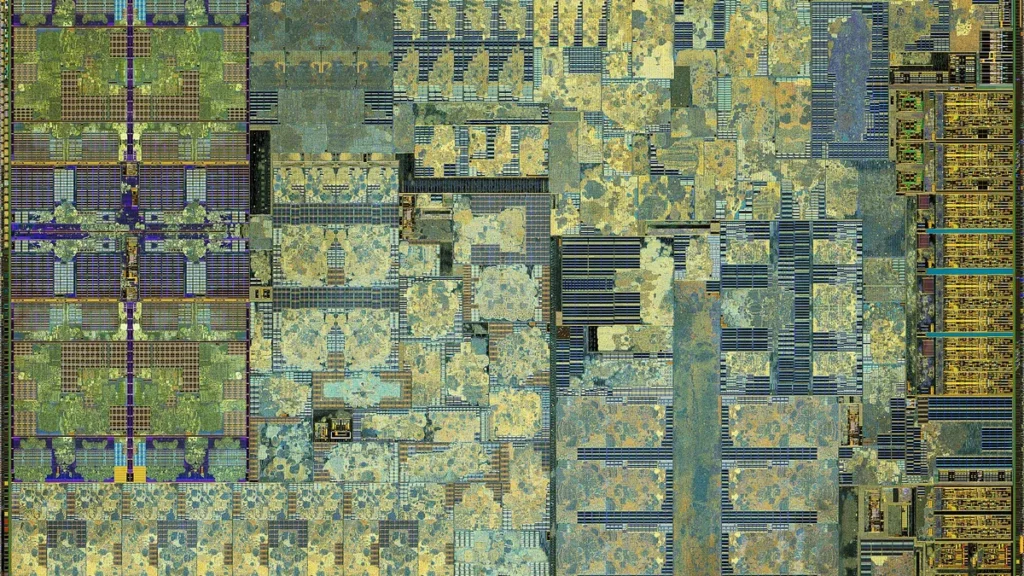
Project Helix is reported to feature 56 teraflops of GPU compute power using AMD RDNA5 architecture and an AMD Zen6 CPU, with development at the tapeout stage, the point when a chip design is finalized for manufacturing. Geeky Gadgets reported that the 56 teraflops figure surpasses the anticipated 40 teraflops of Sony’s PlayStation 6 by 40 percent. The outlet also reported AI-powered upscaling supporting 4K or 8K resolutions.
Microsoft wants Project Helix to offer instant game launches without operating system updates, drivers, or complicated PC settings while still allowing power-user customization. Microsoft has worked with first-party studios since early development and met developers worldwide to learn what they need from future hardware and which technical limitations to overcome.
The Play Anywhere approach lets one game run across several devices while maintaining progress, a concept tested with the Xbox ROG Ally X handheld. Ronald used an 80-hour RPG example, saying a player 25 hours in should be able to resume instantly on another device. Feedback from the ROG Xbox Ally handheld helped shape Helix.
The company is introducing Xbox Labs to modernize older games with upscaled textures, improved frame rates, and ray tracing, and is expanding its disc-to-digital program. Microsoft is also using its Human Factors Lab to study controller ergonomics and accessibility and its Advanced Prototyping Center to test hardware designs with CNC machines and industrial 3D printers. Beebom reported these details as part of Microsoft’s broader hardware development process for Project Helix.
Jason Ronald said he can now play original Xbox games on his PC and a handheld for the first time, a future not envisioned by the original Xbox’s designers. Ronald used this as an example of where preservation and accessibility are already starting to happen today. Ronald described the current moment as challenging but exciting because Microsoft must invent new technology while keeping hardware accessible and affordable.




Join the discussion