

Key facts
- The businesses operate across 10 UK regions with grants from £110,000 to £500,000, and each must match at least 30% of innovation costs.
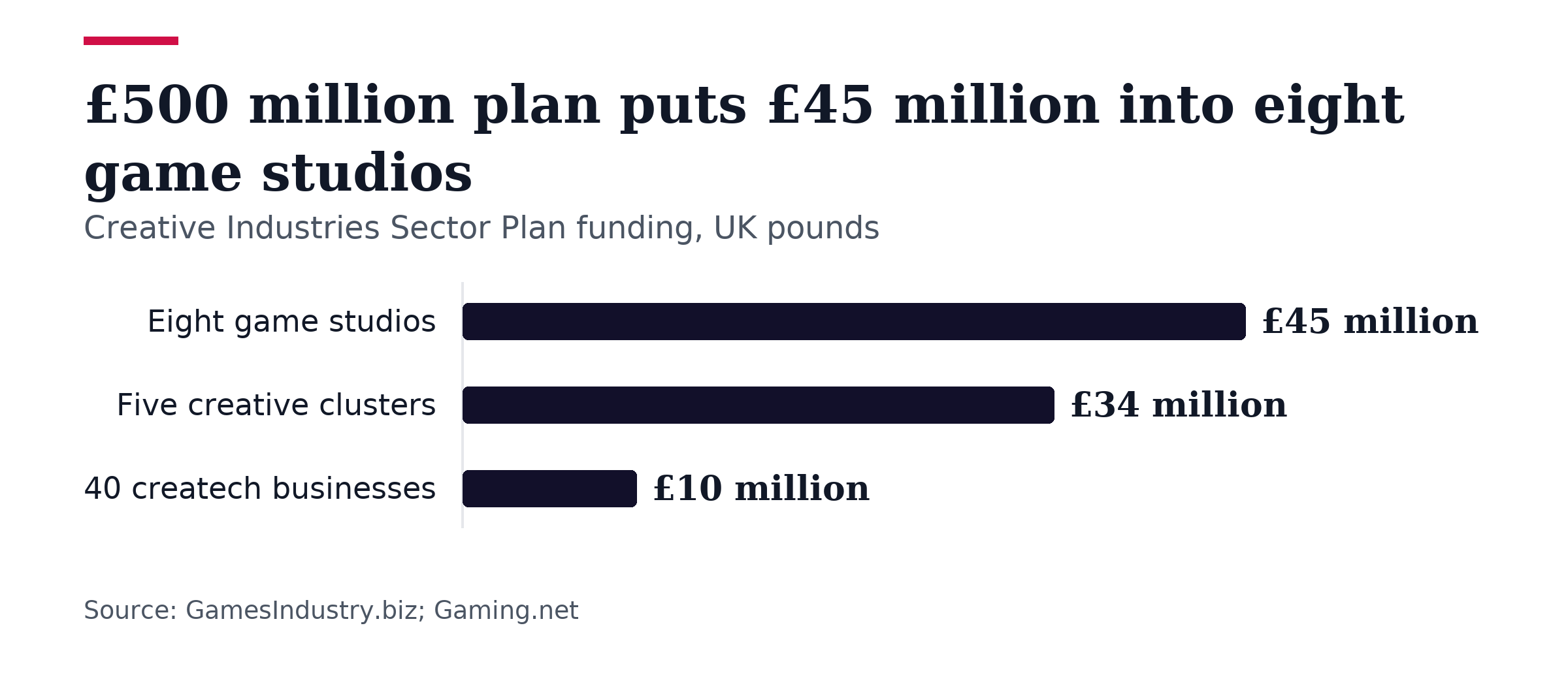
- More than £45 million of the package funds games studios along with music technology, advertising technology and film and TV innovators.
- £34 million is allocated for five new Creative Industries Clusters.
- £10 million is allocated for 40 high-growth createch businesses in the Next Wave pilot delivered by Innovate UK.
On Nov. 25, 2026, UK Research and Innovation announced £49 million for the creative industries across the UK, directing more than £45 million to eight game studios alongside music technology, advertising technology and film and TV innovators.
The awards sit inside a wider £500 million investment by UK Research and Innovation in the Creative Industries Sector Plan, drawn from UKRI’s Creative Industries Programme. The plan was published on June 23, 2025, and set out £380 million in targeted funding, including £30 million for a Video Games Growth Package to grow the UK Games Fund and support the London Games Festival. The current package sets aside £34 million for five new Creative Industries Clusters, £10 million for 40 high-growth createch businesses in the Next Wave pilot delivered by Innovate UK, and £5 million to extend the Creative Industries Policy and Evidence Centre.
The Arts and Humanities Research Council delivers the cluster programme, linking universities, businesses, local and regional policymakers and private funders and placing students on live projects. The round backs Amgen led by the University of South Wales, Green Design North led by Manchester Metropolitan University, CreateSci led by the University of East Anglia, ScreenJourneys led by King’s College London and UK Publishing Futures led by Northumbria University. A further £2.2 million goes to the Great North Creative Corridor.
The first competition for the Next Wave pilot drew 700 applications. Eight studios were chosen: Huey Games, Ten24 Media, AUXA, Digital Tactics, Giggle Byte Studios, Locat Technology, Lurtis and Parable Studios. The businesses operate across 10 UK regions with grants from £110,000 to £500,000, and each must match at least 30% of innovation costs. Most of the eight recipients build tools for studios rather than games of their own.
Huey Games, founded in 2016 and based in the North West, is developing AIGO, a tool that applies machine learning to predict performance on target hardware before major porting work and then offers targeted advice. Rob Hewson, the studio’s chief executive and creative director and a co-founder, directed BAFTA-nominated LEGO titles at TT Games. The studio expects the project to add three new jobs in the United Kingdom.
Ten24 Media, based in Yorkshire and the Humber, is training AI using 7,600 consented human scans from its own dataset to create editable 3D heads from one photo. Sega, EA and PUBG have licensed Ten24 Media’s data, and the grant will pay for validation of production quality and time savings with game studios.
Lurtis is a seed-stage company in the South East behind MORGAINE, a tool that lets narrative designers craft adaptive stories while holding on to authorial control. The tool will not override writer goals, will not train on creators’ work and will keep studio material in-house, Lurtis says. According to Lurtis, one writer using the tool can match what a large team once did, a tenfold gain for each authoring hour.
Digital Tactics, a company founded in 2011, is developing Redstring, which maps a game’s people, groups, locations and history as a connected model that produces lore bibles and integrates with studio tools. Varia is an AI sound-design platform from AUXA, based in Scotland, turning designers’ recordings into controlled variations; the company’s co-founders have Rockstar Games experience, including work on Grand Theft Auto.
Giggle Byte Studios, based in the South East, is developing GiggleBox for families to test, a voice-controlled educational device that parents can manage and that features authored gameplay. Locat Technology, based in London, is taking play off the screen through a game engine that reads player position, plus portable positioning hardware and phone-free wearables. Parable Studios, based in the North East and still at seed stage, is creating a pipeline that pays creatives who provide consented training data and runs compact AI models on players’ own hardware rather than in data centres.
Parable Studios says it launched on-device language models for games early in 2025, sold over 4,000 copies with no marketing and signed two engine licensing deals. Digital Tactics plans a Redstring beta launch at the end of 2027, while Locat plans its first paid pilots in 2027.
Innovate UK’s 2035 goal for Next Wave is at least 10 companies valued at £100 million or more and two valued at £1 billion or more, plus over £100 million in unlocked private investment. Creative Industries Minister Ian Murray said the package speaks to the government’s commitment to decentralisation and innovation across the UK. Professor Christopher Smith, UKRI Creative Industries Champion, called the investments ambitious and wide-ranging and said they cover fresh Creative Industries Clusters around the UK plus 40 createch businesses. In 2026, the UK Games Fund announced its largest cohort since launching in 2015, with 29 independent studios across the UK receiving grants up to £100,000 through the expanded Prototype Fund.





Join the discussion