

This is a new development in a story we reported earlier: Electronic Arts closes BioWare after more than 30 years.
Key facts
- Current and former Electronic Arts employees told Vertical Slice that morale has been terrible after mass layoffs and a heavy push to adopt generative AI tools.
- Electronic Arts upper management is very excited about the AI model Claude and the possibilities of generative AI, according to anonymous employees speaking to Vertical Slice.
- Electronic Arts shut down the Mass Effect and Dragon Age studio BioWare, canceled development on the next Mass Effect game, and laid off 400 employees on October 21, 2026, according to Shacknews.
- The 400-person layoff at Electronic Arts is interrupting game development because critical team members have been removed from development pipeline workflows, according to Vertical Slice reporting cited by TweakTown.
Current and former Electronic Arts employees told Vertical Slice on October 27 and 28, 2026, that morale is terrible after mass layoffs and a heavy push to adopt generative AI tools.
The comments follow Electronic Arts’ shutdown of BioWare, the studio behind Mass Effect and Dragon Age, its cancellation of the next Mass Effect game, and its layoff of 400 employees on October 21, 2026, according to Shacknews. Shacknews reported that Bloomberg provided the layoff headcount and that BioWare issued its own closure statement through social media. The closure came after BioWare’s last credited game, Dragon Age: The Veilguard, and as Electronic Arts prioritized Battlefield 6 and EA Sports titles over the studio’s work.
Electronic Arts managers told workers to follow the mantra do less, better, saying this is the future and employees have to get onboard with generative AI. Workers said the phrase felt hollow because they were handling the same workload with fewer people. Anonymous employees speaking to Vertical Slice said Electronic Arts upper management is excited about the AI model Claude and the possibilities of generative AI.
The publisher has not mandated generative AI use, yet employees say Electronic Arts is forcing them to familiarize themselves with Claude and other AI platforms. Electronic Arts arranged its generative AI systems so that avoiding the tools is reportedly difficult for employees. The 400-person layoff is interrupting game development because it removed critical team members from development pipeline workflows, according to Vertical Slice reporting cited by TweakTown.
Sources told Vertical Slice they feel a striking sense of detachment and resentment toward Electronic Arts, describing it as a cold dead place slowly decaying as leadership takes money while workers worry about feeding their families. According to Vertical Slice sources cited by Tech4Gamers, Electronic Arts developers are reportedly biding their time and want to leave the company if conditions do not improve. Internal fears among Electronic Arts developers about further layoffs might have increased after the BioWare closure.
The canceled Mass Effect game at BioWare was ambitious and had an impressive sizzle reel depicting main characters, with former Halo concept artist Sparth serving as art director.
Electronic Arts announced it would keep investing in sports games, the online shooter Apex Legends, the next Star Wars Jedi title, a new Marvel Iron Man game, and a joint DICE and Respawn title likely to be a new Star Wars Battlefront. Electronic Arts made clear in a 2024 investor brief its all-in focus on generative AI technology, according to TweakTown.
The company showed a prototype chatbot in 2024 that allowed users to type commands and details to change gameplay features such as arenas, items, and characters in real time. A TechSpot report on October 29, 2025, said Electronic Arts leadership intensified calls for its nearly 15,000 employees to incorporate artificial intelligence into daily operations.
TechSpot reported that Electronic Arts internal documents outline expectations for staff to complete training modules and use the company’s ReefGPT chatbot as a thought partner for coding, concept art, and sensitive managerial tasks. Net income declined 9.4 percent in the last fiscal year and fell 28 percent in the final quarter, according to TechSpot.

Electronic Arts completed the largest-ever leveraged buyout in history, a $55 billion deal principally funded by Saudi Arabia that took the company private for the first time. The company’s renewed AI focus follows its acquisition by a consortium led by Saudi Arabia’s Public Investment Fund, alongside Silver Lake and Affinity Partners, according to TechSpot.
TheGamer reported that generative AI could seep into upcoming Electronic Arts releases such as Jedi Survivor, Iron Man, and the rumored Battlefront 3, which would disappoint fans. Employees told TheGamer that the shift to AI and sudden layoffs have been wildly disruptive to current Electronic Arts projects, which could face drastic changes or cancellations if the trend continues.
Electronic Arts employees who spoke anonymously to Business Insider described workforce responses to AI as mixed, at times amounting to open defiance. Employees said generative AI frequently produces flawed code and hallucinations that require manual correction, complicating workflows. Job security fears among character artists and level designers stem from expectations that creative staff train AI models on their own work.
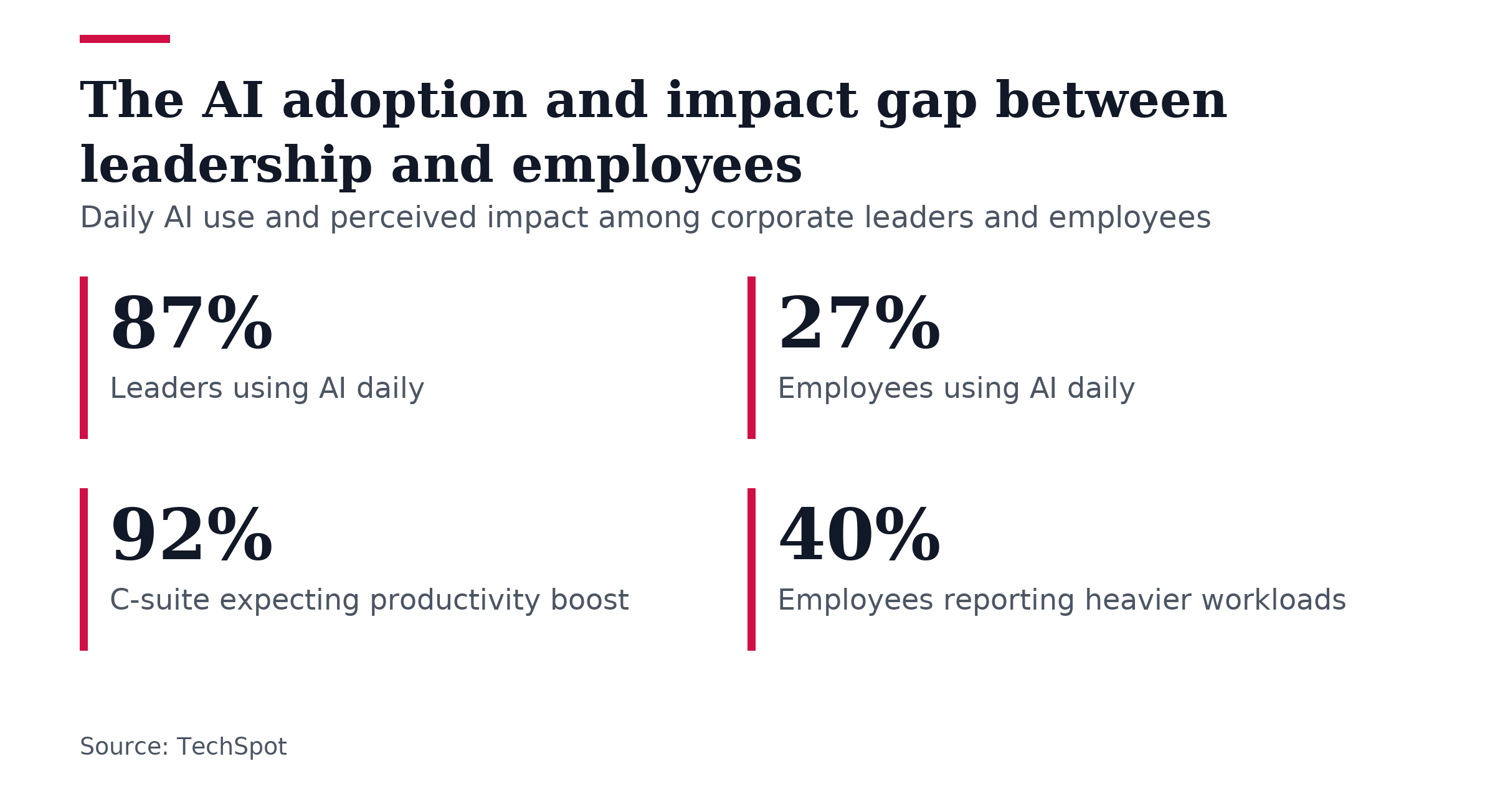
A recently laid-off Electronic Arts employee told Business Insider that AI automated summarizing playtester feedback and suspects this contributed to his redundancy this spring. Surveys cited by TechSpot show 87 percent of corporate leaders at firms with significant annual revenue use AI daily, compared to 27 percent of employees, while 92 percent of C-suite respondents expect AI to enhance productivity, but 40 percent of employees report heavier workloads from new tools.
A survey of 3,000 game developers found nearly one-third reported generative AI harmed the sector, a 12-point increase from the previous year, with rising concern over intellectual property theft, energy consumption, and algorithmic bias. Electronic Arts chair and CEO Andrew Wilson told investors that AI in its different forms has always been central to the creative journey and is the very core of the business, saying, “AI in its different forms has always been central to this creative journey… It’s the very core of our business.”
TechSpot reported that the annual SEC filing acknowledged significant risks, warning that artificial intelligence could present social and ethical risks, legal complications, and reputational harm if not managed properly. TD Cowen analyst Doug Creutz said it is a problem when the dogs won’t eat the dog food, summarizing the AI divide at Electronic Arts. Jackson G. Lu of the MIT Sloan School of Management said employees want a human in the loop for highly personalized, identity-laden, or creative work and recommended deploying AI first for numeric estimation or forecasting before creative tasks with human oversight.
TechSpot reported that game studios eliminated about 14,600 jobs in 2024, and Aldora Intelligence estimates industry employment dropped about 9 percent over two years to roughly 318,000 worldwide from a peak of 350,000. Tim Sweeney has continued pushing for generative AI in the Epic Games launcher and Fortnite while calling out Steam for not supporting the new industry, according to TheGamer. According to TheGamer, CEO Andrew Wilson leads the company from its headquarters in Redwood City, California, United States; it dates to May 27, 1982.




Join the discussion