

Key facts
- Roughly two weeks after the BioWare closure announcement, Spector posted a follow-up on LinkedIn saying he remains unhappy and that BioWare hit him emotionally, leaving him gut-punched.
- Spector rejected the argument that closing BioWare was a sound business decision because its glory days were behind it and businesses do not succeed on history alone.
- Spector said he hopes people who view the closures as sound business decisions never get near running a business and that people have the sense not to work for them.
- EA is now owned by Saudi Arabia's PIF, and the closure has drawn scrutiny of that ownership along with venture capital backers.
EA officially announced the closure of BioWare’s studio and its Edmonton, Canada office on October 21. As a result of the closure, EA canceled the next Mass Effect project, which was in early development. BioWare served as a cornerstone of Western role-playing games for over 30 years before its closure.
The studio had developed Baldur’s Gate, Star Wars: Knights of the Old Republic, Dragon Age, and Mass Effect, building a long history of role-playing titles.
Spector called the BioWare shutdown a historic event and said anyone who participated in the decision should feel ashamed. He asked what executives contribute to gaming, what price they pay for failure, and why the doers and makers always pay the price. Shortly after EA announced BioWare’s closure, Spector said 400 people at BioWare were gone and described the event as utter bullshit.
Though he tries to refrain from cursing in public, Spector said he did not want to hold back his emotions when posting about BioWare on October 22. Spector is best known for leading the original Deus Ex and is a key mind behind Ultima Underworld and System Shock, often called a founder of the immersive sim genre, a type of game in which players solve problems through freedom of action in the game world. He is a veteran of Origin, a studio that EA bought and subsequently shut down decades ago.
Spector announced his intention to retire from video game development in August. The announcement followed the final major update to Thick as Thieves, released only a few months after launch. The game did not sell enough, leading to layoffs at his studio. Spector said Thick as Thieves had charm and a low price but did not sell what it needed to.
Eurogamer reported Spector’s listed EA executive yearly payouts, which included Andrew Wilson at $38.65 million, Laura Miele at $13.7 million, Stuart Canfield at $11.3 million, Jake Schatz at $8.4 million, and Mala Singh at $8.3 million. Yahoo Finance said the EA executive salary figures represent total compensation for EA’s 2026 fiscal year, a single 12-month period.
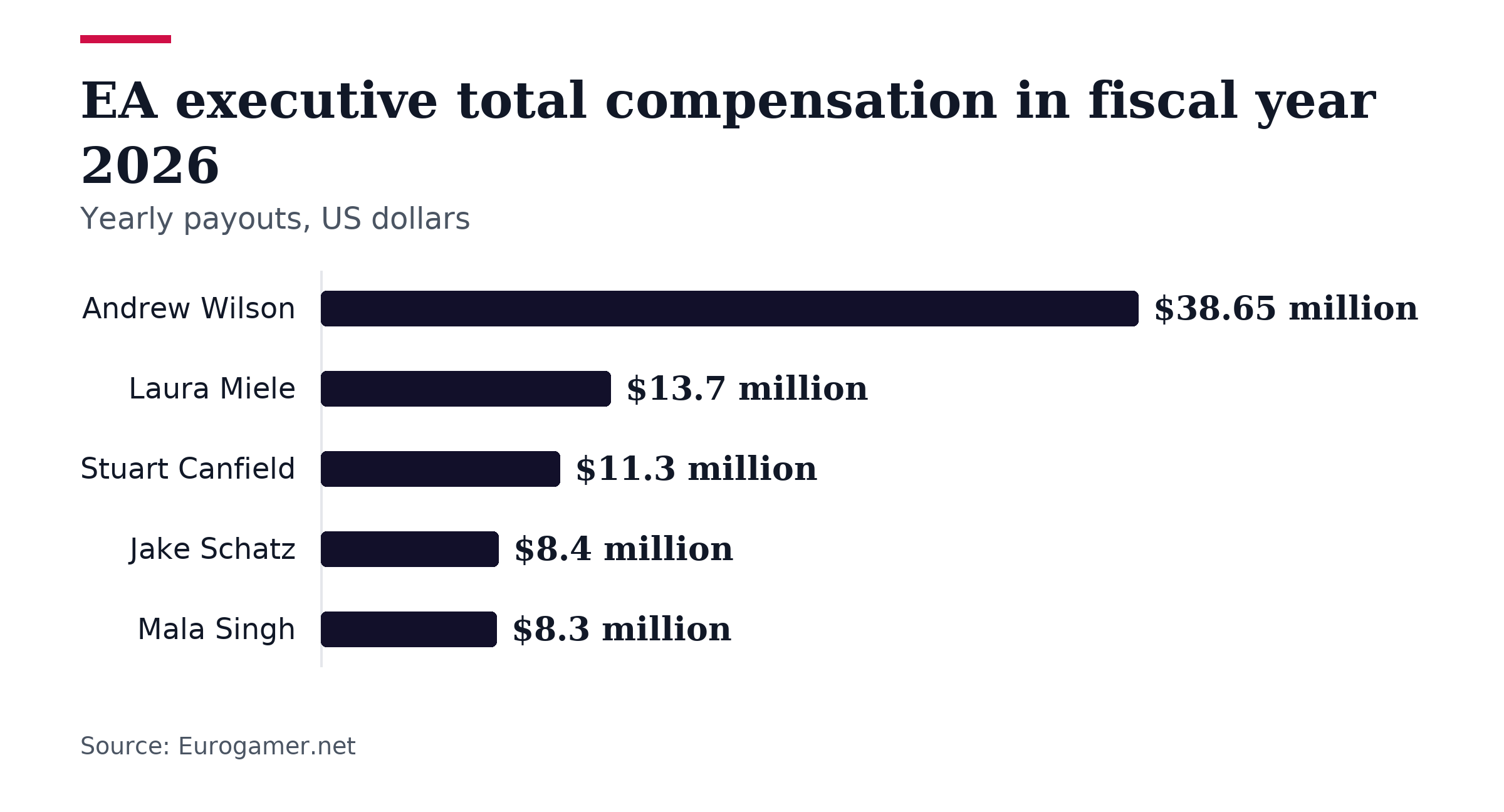
The figures are up from $30.5 million for Wilson and $9.1 million for Miele in 2025. Yahoo Finance also said the figures are not directly related to the BioWare closure. Wilson received an $8 million raise in part for meeting milestones for a high-quality launch of Battlefield 6, and it came months after layoffs at Criterion, DICE, Ripple Effect, and Motive and after the shuttering of Ridgeline Games.
Ridgeline Games had been working on a new, more story-focused Battlefield game before EA entirely shuttered it. EA is now owned by Saudi Arabia’s PIF, and the closure has drawn scrutiny of that ownership along with venture capital backers. Eurogamer described EA’s decision to close BioWare as sudden and said it followed the publisher’s acquisition by Saudi Arabia’s PIF and venture capitalist concerns.
BozokMedia said EA has not provided a singular definitive reason for the closure, and industry discussions point to shifting market strategies and the influence of new financial stakeholders. BozokMedia said venture capital interests and institutional investors like Saudi Arabia’s PIF are pressing for short-term quarterly gains over long-term artistic investment.

That pressure, BozokMedia said, threatens the survival of prestige studios. BozokMedia also called the loss of BioWare a personal tragedy for the medium, transcending professional disappointment.
Spector posted a follow-up on LinkedIn about two weeks after the closure announcement. He said he remains unhappy and that BioWare hit him emotionally, leaving him gut-punched. He asked whether executives suffer like developers when financial partners and private investors take precedence over value creators and players, and whether anyone in or adjacent to the C-suite (a company’s top executives) cares or any accountability remains.
He answered his own accountability question by saying there is no accountability left. Spector said he pointed to EA executive salaries reported earlier this year as evidence that accountability has fallen away. Spector said reactions calling BioWare’s closure a sound business decision inspired his follow-up because he cannot agree with that assessment.
Some readers told Spector that BioWare’s best days were behind it and that shutting it down was a sound business decision. Others cited the commercial failure of Dragon Age: The Veilguard as justification. He rejected the argument that closing BioWare was a sound business decision because its glory days were behind it and businesses do not succeed on history alone.
He said tens of thousands of doers and makers are out of work and asked whether executives think they are worth that kind of compensation. He hopes people who view closures as sound business decisions never get near running a business and that people have the sense not to work for them.
He said it incensed him that business people who make decisions leading to studio closures, not just BioWare, never seem to pay a price. He asked whether culture-killers pay any price when studio-level people leave and dilute talent.
He asked whether executives who misread markets, over-hire, or produce under-funded, over-funded, or poorly-marketed games lose sleep or jobs. He said he would like to see the folks in suits losing their jobs and on the unemployment line, not the developers who do the real work.
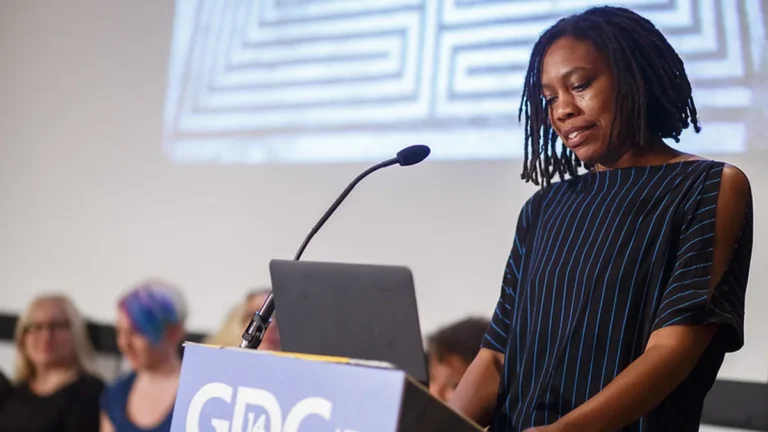
N. K. Jemisin mourned BioWare’s shuttering on Bluesky, saying Mass Effect and Dragon Age inspired her work and that she made lifelong friends through Mass Effect 3 multiplayer. She praised BioWare writer Jennifer Hepler and voice actress Jennifer Hale, and she compared the industry’s trajectory to killing the goose that lays the golden eggs.



Join the discussion