
This is a new development in a story we reported earlier: Hands‑on previews show Switch 2 Ocarina of Time remake’s updated controls and puzzles. Earlier in this story: Nintendo reveals Switch 2 Ocarina integration in Ocarina of Time remake trailer.
Key facts
- Hidemaro Fujibayashi, producer on The Legend of Zelda: Ocarina of Time remake, regularly asks younger team members if an idea will be fun and urges them to pursue new concepts.
- Eiji Aonuma said the remake happened because young people considered how to adapt the title and make it enjoyable once players hold the controls.
- The Legend of Zelda: Ocarina of Time remake released on November 5 on Nintendo Switch 2.
- The original Ocarina of Time was released 28 years ago.
Hidemaro Fujibayashi, producer on The Legend of Zelda: Ocarina of Time remake for Nintendo Switch 2, said that he regularly asks younger developers whether an idea will be fun and urges them to pursue new concepts.
GamingBolt reports that Fujibayashi explained that the Zelda franchise allows malleability, and he uses probing discussions to keep younger staff from feeling they must pull ideas only from an existing pool of Zelda games. He sometimes asks whether a concept already appeared in Breath of the Wild, Tears of the Kingdom, or Ocarina of Time, but clarified these are only examples and he does not say that directly. GamingBolt noted that no one expected Zelda to go open-world or for the Hylian princess to star in a game.
Fujibayashi said the Zelda franchise allows malleability, citing the Nintendo 64 shift from 2D to 3D and the addition of a control stick as examples of developers turning ideas into playable features within the series. He also pointed to Skyward Sword on Wii using gesture controls to swing the sword, and to Breath of the Wild and Tears of the Kingdom offering vast freedom that breaks away from traditional course-charted paths as further proof that developers can realize promising ideas inside the Zelda framework. He described past ideas as nuggets of ideas that developers felt had potential and could realize within Zelda’s foundation. “That said, Fujibayashi constantly asks younger developers whether something will be fun, and encourages them to explore new ideas,” GamingBolt reported.
Eiji Aonuma, who has guided the Zelda franchise for approximately 25 years, said he is very interested to see what younger staff will imagine. He said he is extremely happy to guide them as they think together about the franchise’s direction.
He said the remake happened because young people considered how to adapt the title and make it enjoyable once players hold the controls. Nintendo is reintroducing the remake to an audience that includes players who were not born when Link first traveled through Hyrule in three dimensions.
The Legend of Zelda: Ocarina of Time remake released on Nov. 5, 2026, on Nintendo Switch 2. Some developers behind the remake have never played the 1998 Nintendo 64 classic. Aonuma revealed this ahead of the remake’s Nov. 5, 2026 release on Switch 2, framing it as an advantage rather than a disadvantage.
The remake returns to the original foundation with redesigned puzzles, updated miniboss encounters, and expanded dialogue, modernizing the celebrated title for an audience including players not born when the original launched. The original Ocarina of Time was released 28 years ago and established several mechanics that became staples of modern action-adventure titles. LEGO unveiled The Legend of Zelda: Ocarina of Time – The Final Battle, a 1,003-piece set for $130, featuring Link and Princess Zelda’s confrontation with Ganondorf.
In December 2025, Aonuma said inspiration from the Koei Tecmo collaboration on Hyrule Warriors: Age of Imprisonment may be reflected in the next Zelda they create. Yahoo Tech says this direction could extend beyond revisiting Nintendo’s back catalog.
Aonuma said the remake exists because much younger developers work on the game and gain valuable experience by familiarizing themselves first with the original Ocarina of Time before making their own reinterpretation. Fujibayashi had not previously served as producer on a Zelda game before this one, having directed the last few entries, and IGN asked him about transitioning from director to producer on a Zelda game for the first time. IGN’s interview describes the remake as framed like a legend retold through an opening cutscene, with passing the original to younger developers as a main reason the remake exists.
Changes that leverage Switch 2 hardware include manual camera control, the ability to jump anywhere, entirely renewed graphics, increased sound quality, and background music in 5.1 channel surround sound. Fujibayashi said these hardware-backed changes include manual camera and jumping anywhere, while graphics and sound were renewed across the title. He said the things they would not change were what the original development team wanted to convey and the experience they wanted players to have, and he said there is not one specific thing the team wanted to change or one specific thing that was untouchable. IGN asked whether anything from the original Ocarina of Time was untouchable and had to stay the same, and Fujibayashi said no single element was designated that way, explaining that the team focused on preserving what the original development team wanted to convey through the game.
Fujibayashi said younger staff were basically the directors for the game, and the team clearly defined what would change and what would not change at the start of development. Aonuma said developers were not instructed on specific changes but instead explored the game to sense what felt necessary. Aonuma told IGN younger developers considered how to familiarize and reinterpret the original, with manual camera control and auto jump as examples of changes they decided were justified.
Aonuma described the sessions as discussions rather than teaching lectures, asking younger developers how they felt playing the original and how they interpreted it, and these conversations often happened with directors. The talks covered balancing the imagination players bring and the problem-solving they are allowed, based on the information gap left for them. He said leaving too much information removes player satisfaction from making jumps, so they leveled set around leaving exactly the right gap. Aonuma said they asked if the developers wanted to change something based on their feelings playing the original.
The Hall of Fallen Foes is a new element not in the original Ocarina of Time where players can see models of defeated enemies, read descriptions, and recreate some boss battles, Aonuma said. He said they would not announce anything specific at this time regarding Master Quest or other additional content, while leaving open the possibility for developers to consider future ideas from cut content. He was responding to a question about including Master Quest or additional content from the original development.
IGN reported that playing the remake on Switch 2 triggered muscle memory conflicts, such as expecting Link to auto jump or being able to climb rocks, describing the overlap of modern presentation and controls with the old-school Zelda world. The outlet’s interviewer said motion aiming felt great before walking off a bridge. Aonuma said he hopes players with Tears of the Kingdom and Breath of the Wild experience find the changes natural, and admitted he fell into deep pits himself while discussing how returning and new players would experience the remake. Aonuma said auto jump adds greater freedom than the original jump system but requires additional review to control player access if they can jump absolutely anywhere, and he said the changes bring freshness while maintaining the feel of the original.
The remake opens with a cutscene depicting Hyrule’s people and places while a narrator reflects on Link’s journey as a story worth passing down, and IGN framed the opening as the game presenting itself as a legend retold. Aonuma said the cutscene was contributed by developers working directly on the game, not necessarily created by him with legacy in mind, and he made the point while discussing parallels between the opening scene and the development process.
Fujibayashi said the core of a Zelda game is exploration and discovery, present from the first Zelda to Tears of the Kingdom, and he said this while discussing positive aspects of the more linear 3D Zelda formula. He said a focused 3D Zelda experience brings modern comforts such as a second analog stick for camera control, easing gameplay and letting players concentrate on the core Zelda experience. Fujibayashi described the result as almost multiplicative gameplay that lets players dive deeper into exploration and discovery, part of his reflection on blending modern presentation with the old-school world.
Aonuma said the remake idea came after Tears of the Kingdom development ended, as staff moved to other projects and the team discussed the 40th anniversary timing, and he said Ocarina of Time seemed like a good starting point for many players and for his own professional start with the series. Fujibayashi said his producer role stayed close to the front lines, but he had to adjust advice and communication for a younger staff with a vast age range and different language.
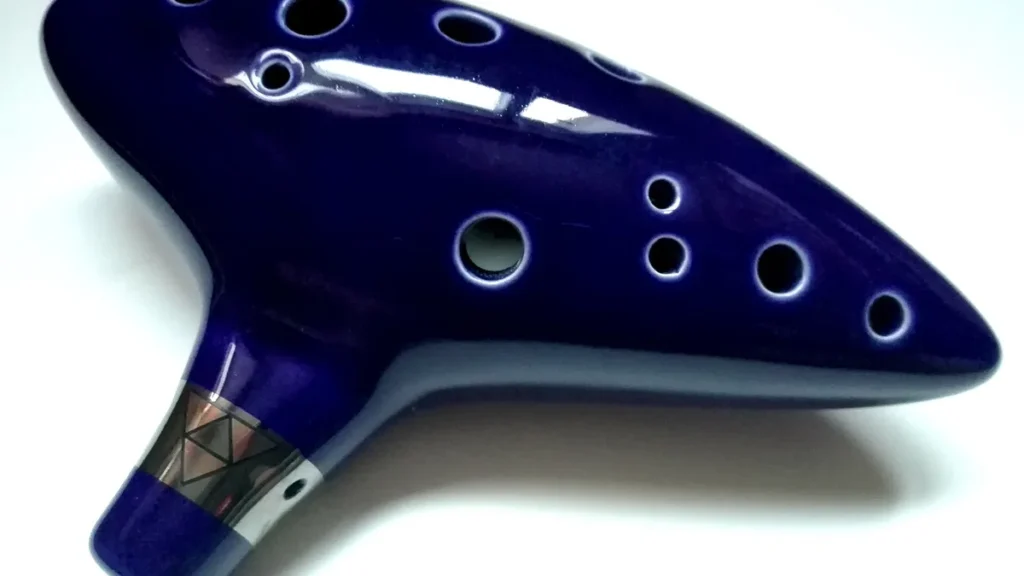
Fujibayashi said Nintendo developers pull from real-world expertise outside games, such as designers experiencing fabrics and rocks to create a believable world, and he cited designers going out into the real world to check out fabrics and rocks for the remake. Animation staff studied actual ocarina players to capture hand movements and coordination for the remake, which Aonuma cited as an example of real-world inspiration during development.
The team discussed a puppet show feel and analog practical effects films, and the original Z-targeting came from a field trip to see a sword fight at a movie village theme park. Aonuma said the broader idea is looking at the real world for motifs that add realism, immersion, or ease of play, and he said developers bring aspects of their personal lives and everyday life into the game, which relates to looking at the real world for helpful motifs.
Fujibayashi said his countryside upbringing influenced food and survival aspects in Breath of the Wild and Tears of the Kingdom, and he grew up playing in mountains and rivers. He said his non-director role meant nothing directly impacted the Ocarina of Time remake.
Aonuma said his favorite side character is Ingo at Lon Lon Ranch, a bad guy but not a real villain, giving players joy that he is still alive, and he said it was a chance to draw out more of Ingo’s story and experience. Fujibayashi said his favorite side character is Dampe, whose graveyard minigame and reward made a unique and surprising encounter, and he said Dampe has a unique aura and the reward turns out to be really great.
Developers sometimes told him an aspect was important even though it was not part of the original team’s intent, and he listened and supported their direction because he could not dismiss their reaction as it was important to them, Aonuma said. Fujibayashi and Aonuma said there are too many such incidents to single out one example when asked whether a specific interaction with a younger developer stood out the most.
GamingBolt reported that Switch 2 sales were down over the previous quarter, and the company’s full 2027 slate has not been outlined, though Xenoblade Genesis, Metroid Ravenous, and FromSoftware’s The Duskbloods are confirmed. Nintendo has not announced the next mainline Zelda title or whether a remake such as Majora’s Mask is in development, and GamingBolt says where the series goes next is anyone’s guess given the lack of announcements. GamingBolt reported the remake launched to universal critical acclaim, creating renewed appreciation for the series’ traditional format after Breath of the Wild and Tears of the Kingdom, tying the acclaim to renewed interest in classic Zelda design after the more experimental open-air entries.




Join the discussion