
Key facts
- After the strike, SAG-AFTRA introduced the Interactive Media Agreement. S1 says the union introduced the Interactive Media Agreement after the strike, and S3 describes it as the 2025 contract serving established studios.
- The agreement that followed the strike provided pay increases, along with health and retirement contributions, and included AI safety guardrails.
- SAG-AFTRA's own summary of the 2025 agreement says performers got an immediate 15.17% compensation increase, with 3% increases coming in later years.
- SAG-AFTRA's own account says the ratification vote approved the 2025 agreement at 95.04%.
SAG-AFTRA launched the Pre-Funding Pitch Interactive Media Agreement in the United States on Nov. 5, 2026, letting game developers hire professional union actors for pre-funding pitch materials before full production funding.
Developers may hire union actors for demos and vertical slices under the deal, while trailers and teasers count as covered materials, as do sizzle reels and playable prototypes. Eligible projects must have 30% or less of initial production funding secured and must not appear to be complete. Under the ceiling, a project at exactly 30% seems eligible, but one at 31% does not.
Covered projects may not be made available to the public for gameplay, and crowdfunded projects are ineligible. Developers may seek a waiver from the union if a project meets some but not all requirements, though reports do not describe the waiver process, criteria, or decision timeline.s
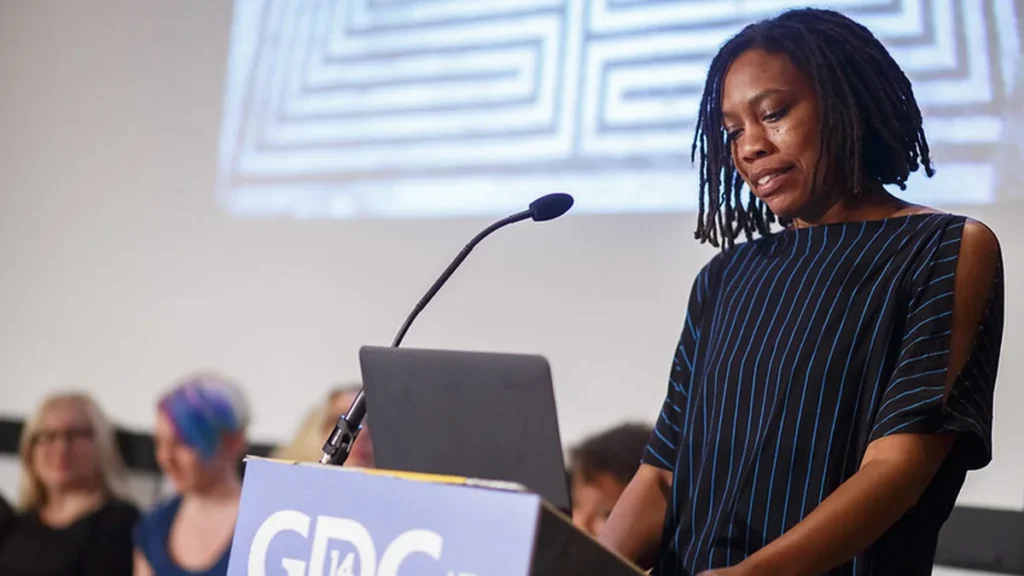
Sean Astin, SAG-AFTRA president, said the deal lets developers bring in professional voice and motion performance talent earlier to create a higher-quality product aimed at capturing imaginations and funding. “This agreement allows developers to up their game by bringing in professional voice and motion performance talent earlier in the process,” Astin said.s
Duncan Crabtree-Ireland, SAG-AFTRA national executive director and CEO, said the agreement streamlines hiring of professional union talent and can help developers get backing in a competitive industry. “The Pre-Funding Pitch Interactive Media Agreement streamlines the hiring of professional union talent,” Crabtree-Ireland said.
The new deal follows an 11-month strike that spanned 2024 to 2025 after talks collapsed with several publishers and developers over compensation, unregulated AI use, and safety. The strike impacted development of several games, and actors were prevented from helping to promote games they had appeared in before the strike. After the strike, SAG-AFTRA introduced the Interactive Media Agreement, the 2025 contract serving established studios.s
That post-strike contract provided pay increases, along with health and retirement contributions, and included AI safety guardrails. SAG-AFTRA’s own summary says performers received an immediate 15.17% compensation increase, with 3% increases coming in later years, and the ratification vote approved the agreement at 95.04%. The 2025 agreement was ratified in the summer, is now in effect, and addresses AI through rules for a performer’s digital replica, requiring separate written consent before creating or using one.s
Consent must be in writing, separately signed, and specific enough to state whether the game uses prior IP, whether the performer reprises a role, and whether the replica supports real-time generation. The agreement lets producers build Independently Created Digital Replicas from generative AI tools prompted by a performer’s name, paying a rate the two sides negotiate. Under the 2025 IMA, recognizability serves as a key trigger when output is identifiable as a specific Principal Performer.
One exception to the consent rule covers pre-production materials for franchise programs that the performer has joined. Digital replicas under the 2025 IMA carry compensation at the agreement’s specific minimum rates. Independently Created Digital Replicas use a negotiated rate unless used for real-time generation.
Before the deal, small teams seeking union pitch talent faced either an unaffordable full interactive media contract, non-union performers, or no professional performance at all. Pitch work for performers was frequently informal, underpaid, or unpaid, often trading labor for exposure or a future role. The union has long represented US gaming talent and organized two strikes against the gaming industry.s
The union hopes early casting draws attention to a project and keeps developers working with union rather than non-union talent. Developers have voiced frustration about the difficulty of securing funding for their games. A polished vertical slice can make a pitch deck feel more like a shippable game.s
Available reports do not confirm any specific game, studio, or actor using the agreement, nor pay rates, an application deadline, or a program start date. The announcement leaves unclear how a studio proves its funding level, omitting any audit, self-attestation form, or third-party check. Public demo events and festival booths fall into a gray zone regarding public gameplay availability.s
How projects transition to standard terms after funding arrives is not specified. Available reports include no specific AI terms, leaving unknown whether pitch recordings carry the same replica rules as the 2025 agreement. Developers outside SAG-AFTRA’s jurisdiction face a separate problem because the reports describe a US union agreement and omit international performers.s
Developers must consult the actual contract text because the announcement omits scale rates, residuals, and usage terms for pitch work. The agreement does not state that SAG-AFTRA is lowering any compensation floor. No published figures exist on project uptake for the agreement. Independent and mid-size studios with strong concepts but limited cash stand to benefit.



Join the discussion