
Key facts
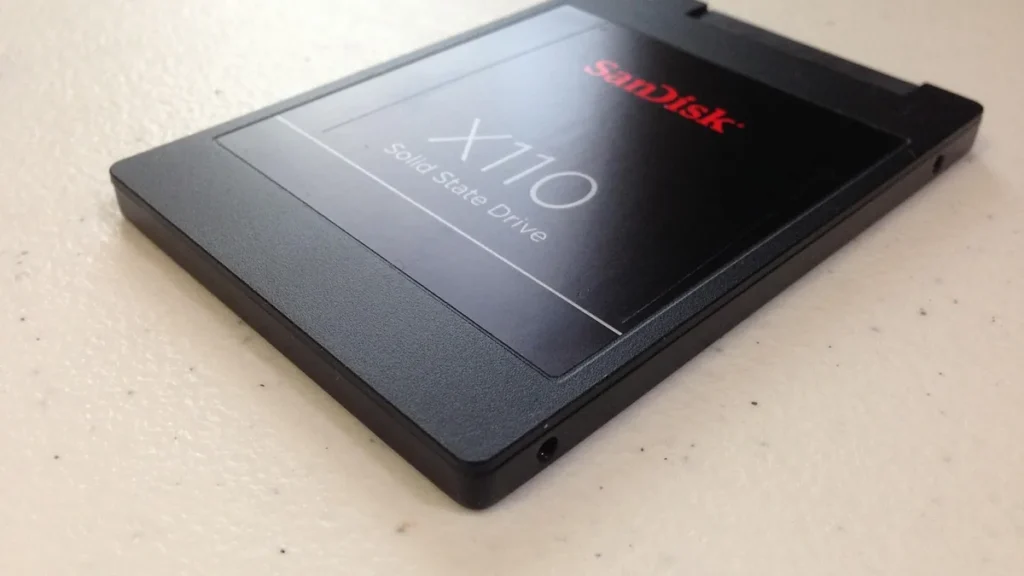
- Nvidia issued GeForce Hotfix Driver 621.35 to stop excessive background writes to the nvlog.nvlgstg file on solid state drives.
- Users reported excessive writes of up to 30 gigabytes per hour to SSDs.
- The culprit process is NVIDIA Display Container, repeatedly rewriting the log file rather than appending new entries.
- Nvidia's GeForce Hotfix Driver version 621.35 does not actually resolve the excessive SSD write issue, according to users on Nvidia's subreddit who report the problem persists.
Nvidia issued GeForce Hotfix Driver 621.35 on Nov. 20, 2026 to stop excessive background writes to solid state drives. Users on Nvidia’s subreddit say the hotfix does not fully resolve the issue.
The company built hotfix 621.35 on Game Ready WHQL driver 621.24, released Nov. 12, 2026, and its release notes address excessive background writes to the nvlog.nvlgstg file under bug reference 7116722. HotHardware reports NVIDIA’s acknowledgment confirms the issue was indeed a driver bug. The NVIDIA Display Container process keeps rewriting that log file in Nvidia’s ProgramData directory rather than adding new entries to the end. GameLuster points to the nvtopps file as the culprit, whereas other sources point to nvlog.nvlgstg.
The bug affects driver versions 621.14, released Nov. 4, 2026, and 621.24, released Nov. 12, 2026. Forum users on Nvidia’s own boards started reporting the SSD write problem in the week of Nov. 16, describing hourly writes as high as 30 gigabytes. SSDs have finite write endurance, so writes at that pace can wear down a drive over several years of continuous use.
Once installed, the hotfix halts the issue initially, yet the background write cycle comes back during extended uptime and occurs less frequently than with driver 621.24. PC Gamer reports the hotfix reduces peak write rate and prevents it briefly after reboot before the issue creeps back in. Version 621.35 still records fewer total writes than drivers 621.24 and 621.14. Driver 621.24 generated 1.18 terabytes of input/output writes over five days and reached 9.15 megabytes per second while browsing.
One Reddit user’s test recorded 36 gigabytes written to an NVMe drive while the PC sat idle overnight, totaling 40.85 gigabytes of input/output writes across nine idle hours at an average of 1.26 megabytes per second. During the first hour after installation, NVDisplay.Container.exe wrote just 90.8 kilobytes. The tester used a Windows 11 26H2 machine with an RTX 4090 and Samsung 990 PRO 2TB SSD, tracking writes through HWiNFO64 S.M.A.R.T. host metrics. Wccftech cautions the overnight result is just one isolated case.
PC Gamer cites a user who said the log file continued to be overwritten overnight at roughly 4.5 gigabytes per hour even after the hotfix was installed. The publication says rolling back to driver version 621.01 is the best option, and users should avoid newer drivers until their safety is confirmed.
On driver 621.01, NVDisplay.Container.exe wrote 12.55 megabytes over 55 minutes and 9.47 megabytes over 93 minutes. TechPowerUp measured roughly 2 megabytes written during each five-minute idle period on the older driver. DLSS Frame Generation Preset C ships with the NVIDIA App even in driver updates dating back to version 617.42, so switching to an older driver is not a major hardship.
The company offers the hotfix only through its Customer Care site, and PC Gamer reports it is not yet in the GeForce app. The hotfix supports Windows 10 and Windows 11. Nvidia describes hotfix drivers as optional beta updates that receive less quality assurance than full releases. The company says a corrected driver will arrive in a future WHQL-certified release, but it has not set a date, and Nvidia plans to pull the hotfix once the next full driver release ships.
Nvidia departed from its usual release cadence to push out the out-of-band hotfix, announcing it on its forum on Nov. 21, 2026. The company typically times driver releases around major game or product launches. An Nvidia employee wrote that a GeForce driver is an incredibly complex piece of software, and the company says waiting for the normal release cycle would have left the SSD bug active for an unknown period.
AMD faced a comparable SSD write issue earlier in November and issued optional Adrenalin Edition 26.11.1 software on Nov. 12, 2026 to fix it. The update addresses unneeded disk activity during idle use or while moving and resizing windows. The two bugs show no correlation, though Nvidia’s issue might have surfaced sooner due to awareness of AMD’s writing problem. On affected AMD systems, the External Events Utility service saw writes of up to 5 megabytes per second on solid state drives.
Users can verify the bug by checking Windows Resource Monitor for NVDisplay.Container.exe producing noticeably high active writes in bytes per second. Earlier workarounds involved reverting to driver version 621.01 or halting the NVIDIA Display Container LS service.
Nvidia has not disclosed the number of affected users or confirmed if any drives suffered damage. TechPowerUp advises affected users to download the hotfix immediately, while others can wait for the next WHQL-certified release. PC Gamer says rolling back to 621.01 is the best option, and HotHardware says users unwilling to risk the hotfix can hold out for the next Game Ready driver. The out-of-band update could prevent unnecessary SSD wear and avoid a costly drive replacement later, according to HotHardware.




Join the discussion