

Key facts
- Tiny Terraces developer VuVuu reported $136,195 in Steam revenue versus $916 on the Epic Games Store for one year before tax, a difference of roughly 148 times.
- Multiple developers say they receive only zero to three percent of their sales from Epic's store.
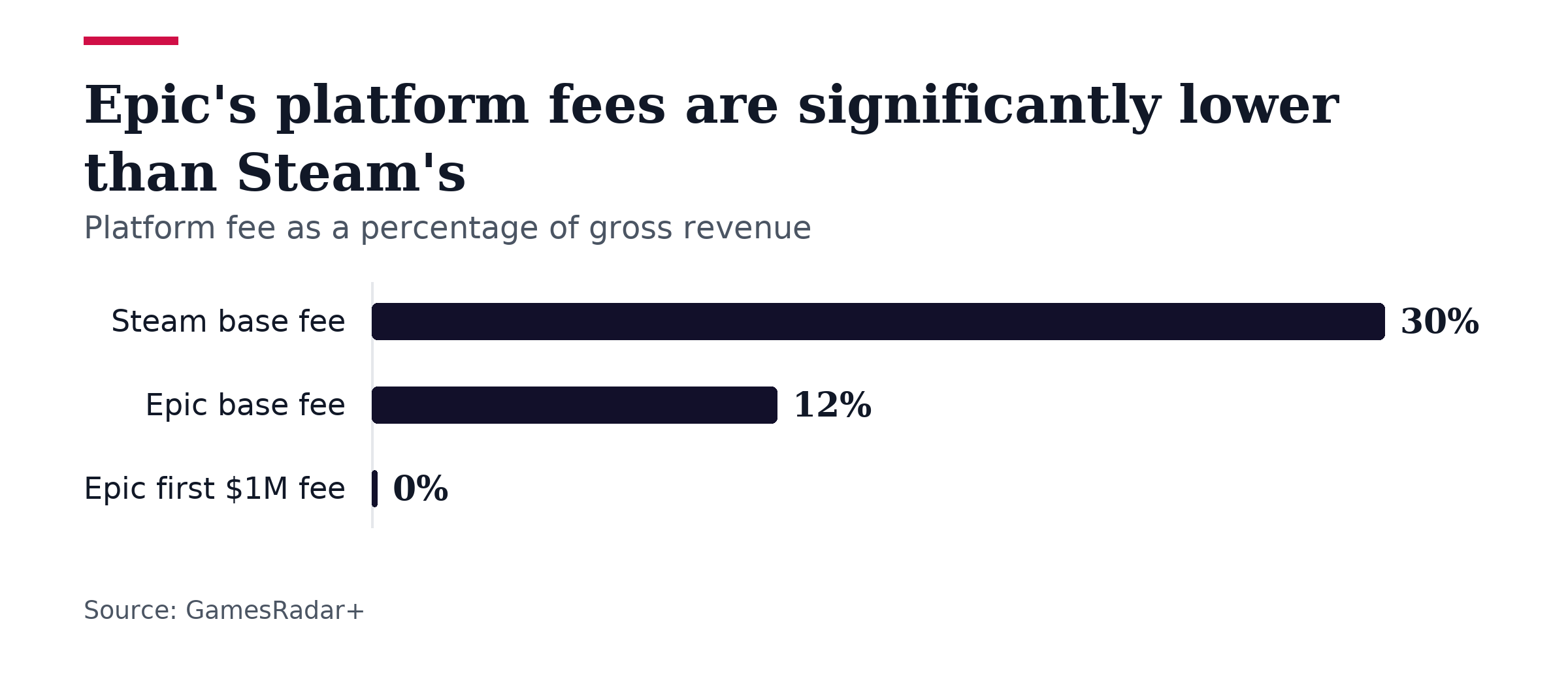
- Valve takes a base 30 percent from all Steam sales, while Epic takes 12 percent and charges zero percent on the first $1 million in gross revenue each year.
- Kernel Hearts developer Ephemera Games said roughly six out of every ten PC copies sold were on the Epic Games Store, three on Steam and one on Xbox.
Solo developer VuVuu reported Nov. 19, 2026 that Tiny Terraces earned $136,195 on Steam before tax versus $916 on the Epic Games Store for one year, a gap of roughly 148 times.
The post appeared Nov. 19, 2026 as VuVuu joined a Twitter discussion about PC store rivalry and linked to Tiny Terraces on Steam, joking about Gabe Newell buying yachts. The figures arrived alongside indie developer Evgeny Grishakov’s breakdown of Valve‘s 30 percent cut versus Epic’s 12 percent cut with a $1 million grace period. “Steam is still the better deal for most indie games, because that’s where the players are,” Grishakov said.
Developers say they receive only zero to three percent of their sales from Epic’s store. Skydome, maker of The Hive, said on Nov. 19, 2026 that it would gladly pay Steam 30 percent for the visibility and revenue Steam brings.
Ephemera Games offered a different split. Roughly six out of every 10 PC copies of Kernel Hearts sold on the Epic Games Store, three on Steam and one on Xbox in October 2026, a gap the studio tied to the popularity of Fernet, a pink-haired magical girl who became a Fortnite skin. The game sells at roughly the same price across storefronts.
Selling 100,000 copies at $20 would generate $2 million in revenue, Ephemera estimated, with Steam platform fees of roughly $600,000 versus $120,000 on Epic after the first $1 million is fee-free, a $480,000 difference. The studio called the simplified example life-changing for a small team and urged developers to put games on the Epic Games Store, while acknowledging it leaves out regional pricing, refunds, taxes and other deductions. It also said neither Steam nor Epic offers a magical solution to the tax fairy.
Steam set a new all-time high for simultaneous users as 43.5 million people logged in at once in October 2026. IGN reported that Epic’s PC storefront is not cutting into Valve’s lead, even though it gives developers better financial terms.
Tim Sweeney called Steam’s AI content disclosure policy a political act on Oct. 26, 2026, and said forcing developers to write political statements for use by a hate mob is abhorrent. He likened the disclosures to requiring developers to list their political affiliations or voting history. Valve has remained quiet throughout the criticism.
Steam’s policy requires developers to report AI use in creating content that ships with a game and that players consume, covering artwork, sound, narrative and localization, but not efficiency gains from AI tools. Sweeney’s comments drew backlash, including from developers who said Valve was only providing clarity customers wanted.

David Goldfarb, founder of Metal Hellsinger developer The Outsiders and a former Battlefield developer, replied that customers have a right to know what they are buying and called the idea of a hate mob far-fetched. One person ridiculed Sweeney by saying equating AI to how a person votes is pure cope gymnastics. Sweeney claimed Valve is damaging developer revenue through AI hate campaigns and insisted there is a real economic cost to Valve’s push for forced political disclosures.
Sweeney also said on Oct. 26, 2026 that Epic recently underwent a major overhaul aimed at AI acceleration, describing it as a pivot for the company. Epic introduced an Unreal Engine vibe coding contest (using AI to generate code from a description instead of writing it conventionally) that used a six-fingered hand image, apparently joking about weak AI-generated pictures. The Unreal Engine account dated Oct. 22, 2026 announced that the 2026 Epic AI MegaJam starts on Nov. 12.
Martin Keely, Epic Games Store general manager and VP, said the team started from scratch and used AI to write and review features in a different tech stack, and that the AI approach let a small team rewrite the code base and ship faster on Windows, Mac and a forthcoming Linux version. Ars Technica found the new launcher reaches the store page faster than Steam after a cold start, while Epic says the Library screen comes up more quickly from the system tray; the outlet called the 0.06-second difference too small to notice.
In 2025, Epic had 78 million monthly active users and earned $400 million from non-Epic games. Liz Markman, Epic’s global communications director, told Bloomberg the figures were “lower than our growth expectations at launch.”
Epic cut more than 1,000 jobs on April 15, 2026, following an unexpected decline in Fortnite engagement during the previous year. The company is working to combine its PC store and mobile app into one platform across devices, an ambition that has drawn scrutiny from critics who say Epic rushes its releases.
Bloomberg also reported that Epic used millions of dollars in contractor funding to release its 2024 mobile game store app within seven months. It’s also developing a new extraction shooter alongside Disney under a $1.5 billion partnership agreement and has pursued side quests including the purchase of Art Station and the later purchase and sale of Bandcamp.




Join the discussion