

This is a new development in a story we reported earlier: Hands‑on previews show Switch 2 Ocarina of Time remake’s updated controls and puzzles. Earlier in this story: Nintendo reveals Switch 2 Ocarina integration in Ocarina of Time remake trailer.
Key facts
- EPD Production Group No. 3 is the internal Nintendo team responsible for nearly every Zelda entry since the early 2000s, and this same group developed the Ocarina of Time Switch 2 remake.
- Nintendo released Parts 1 and 2 of Ask the Developer Vol. 24 on November 2, 2026, and scheduled Parts 3 and 4 for November 3, 2026.
- HokWai Ng served as director of the remake in his first directorial role at Nintendo, having previously worked on Tears of the Kingdom.
- Aonuma intentionally gave younger developers authority to decide what changes to make to the remake, viewing the project as a way to give modern Zelda developers historical context about the original game.
Nintendo confirmed on November 2, 2026, that EPD Production Group No. 3, its primary internal Zelda team, developed the Switch 2 remake of The Legend of Zelda: Ocarina of Time rather than an outsourced studio.
Before the confirmation, some fans believed Xenoblade developer Monolith Soft might be leading the remake, and outside support remained possible because the full credits were not yet known on November 2. EPD Production Group No. 3 has worked on nearly all mainline Zelda games dating back to the early 2000s, and that same internal team built this remake.
HokWai Ng directed the remake, marking his first directorial role at Nintendo after work on Tears of the Kingdom. Aya Shida was art director after leading characters on Tears of the Kingdom and helping develop characters since Breath of the Wild. Hiroki Taguchi took the program director role after starting at Nintendo as a fresh graduate and helping build Breath of the Wild mechanics and cutscenes. Masato Ohashi served as sound director and music lead after writing music for Tears of the Kingdom and Echoes of Wisdom.
Eiji Aonuma and Hidemaro Fujibayashi served as producers, with Aonuma stepping back so younger developers could decide what changes to make. He said he “basically let the developers make whatever changes they genuinely felt were necessary,” viewing the project as a way to give modern Zelda developers historical context because many team members had not worked on the original, and some were children when it came out.
The developers set a rule that the look could change while the play experience stayed familiar, keeping the original’s careful structure instead of moving to Breath of the Wild’s open-world style. As director HokWai Ng put it, “the visuals may change, but the experience does not.” The team studied old textiles and played with cloth spun from thread to make Young Link’s clothes look genuinely handcrafted by children in Kokiri Forest.
The artist who drew maps for the original Nintendo 64 game came back to draw a new map for the Switch 2 remake. The team put high detail into places players can explore, left distant scenery simpler, and made landmarks such as the castle and windmill larger to vary the scale. The game kept the original’s layout of separate maps for each area rather than one seamless world, keeping the feel of each place and the shifts between them.
The producer asked for more warp points to cut travel time, but developers took them out after playtests showed that skipping ahead made players overlook small meetings and details. Using separate maps instead of one continuous world gave players a natural pause between areas to think about their journey and look ahead to what comes next.
Added features include better controls and camera work, optional motion aiming, voice acting with new dialogue, ocarina songs played through the microphone, a progress feature named Threads of Time, and a Hall of Fallen Foes where players can refight monsters. The game needs about 27 GB of download space and supports HDR (high dynamic range) and VRR (variable refresh rate) on compatible televisions, playable on TV, in tabletop mode, or handheld. Buying the game digitally before November 23 at 11:59 PM PT gets players a 40th anniversary wallpaper, and the game works with ZELDA NOTES in the Nintendo Switch App plus rewards for Zelda amiibo.
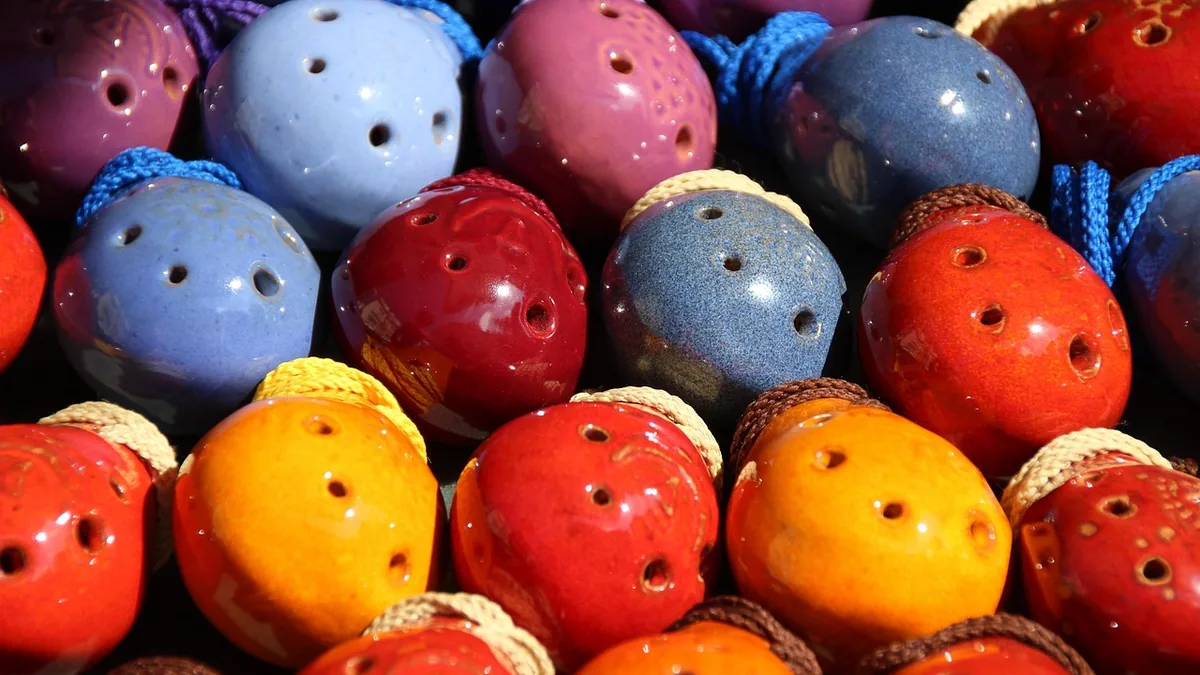
Two new amiibo figures of Young Link and Young Zelda will unlock retro-style masks in the game, though they are not due until 2027, and a separate Electric Ocarina of Time accessory costs $49.99. The Ocarina of Time remake arrives November 5, 2026, only on Nintendo Switch 2, costs $59.99 in the United States, and anchors the Zelda 40th anniversary celebration. A full symphonic orchestral score backs the new voice acting, matching what Nintendo showed in its October 14, 2026 overview trailer. Players can hum ocarina songs or play them on a real instrument into the Switch 2 microphone, but button controls still work too.
The game has appeared on six hardware systems — N64, GameCube, Wii, Wii U, 3DS, and Switch — making the 2026 Switch 2 version the eighth separate release in its history. The first version arrived 28 years before the 2026 remake. Nintendo revealed the remake during the June 9, 2026, Nintendo Direct and showed an introduction trailer in the September 8, 2026, Zelda 40th Anniversary Direct.
The Zelda 40th Anniversary Edition Switch 2 console, priced at $519, was scheduled to launch on October 29, 2026. Walmart put a sales block on the Zelda console at some stores, keeping it through at least November 6, 2026, and told workers not to override the lock or cancel existing pre-orders, which Walmart would fill as inventory arrived with priority. Nintendo and Walmart have not confirmed the delay, and the image posted online did not show how many stores were involved. VideoGamer cited a Kotaku report that Walmart canceled pre-orders for the $519 special edition console and gave affected US buyers 48 hours to reorder.
Ng said he played the original Nintendo 64 game in high school, and something unlike anything the world had seen before blew him away. Shida had not played the Nintendo 64 version until she joined the project, and such a polished game from 28 years earlier surprised her. Taguchi had not played the original when it came out, though he knew its legendary reputation, and joining the remake team surprised him. Ohashi said the music work was delicate because he did not want to disturb the memories players still hold of Kondo-san’s compositions.
Taguchi said the original’s precise assembly and careful balance meant taking out one piece could make everything collapse. Fujibayashi said remarkable craftsmanship went into every part of the original, and the team carried that spirit into the remake by spending time and money on every detail. Aonuma said the people and technology behind the remake are new, yet the heart of the game stays the same.
Shida said Hyrule’s dark beauty alongside its colorful, quirky characters created the original’s mysterious, dreamlike charm, which guided the remake’s visuals. Early on, the art team described the look with the ideas of a puppet-show feel and the analog feel of practical effects films, then made sketches and a Great Deku Tree model to show Aonuma the intended direction. Aonuma said the original Nintendo 64 team believed they were building something cutting-edge instead of nostalgic, while the current team feels nostalgia when looking back at the game.
Nintendo put out Parts 1 and 2 of Ask the Developer Vol. 24 on November 2, 2026, and set Parts 3 and 4 for November 3, 2026. The opening chapter spotlights Aonuma and Fujibayashi, with Ng, Shida, Taguchi, and Ohashi scheduled for later installments.


Join the discussion