
This is a new development in a story we reported earlier: Hands‑on previews show Switch 2 Ocarina of Time remake’s updated controls and puzzles. Earlier in this story: Nintendo reveals Switch 2 Ocarina integration in Ocarina of Time remake trailer.
Key facts
- The Legend of Zelda: Ocarina of Time remake launched on Nintendo Switch 2 on November 5, 2026.
- Bihldorff said remakes bring deep satisfaction to veterans and offer newcomers a brand-new 2026 experience if they never played the original.
- The Ocarina of Time remake holds a Metacritic score of 96 out of 100 based on 80 reviews, with reviewers offering no mixed or negative feedback.
- Switch 2 first-half sales totaled 6.49 million units, a drop from 10.36 million in the prior-year period.
Nintendo released The Legend of Zelda: Ocarina of Time remake on Switch 2 on November 5, 2026, after the Star Fox remake launched in June 2026.
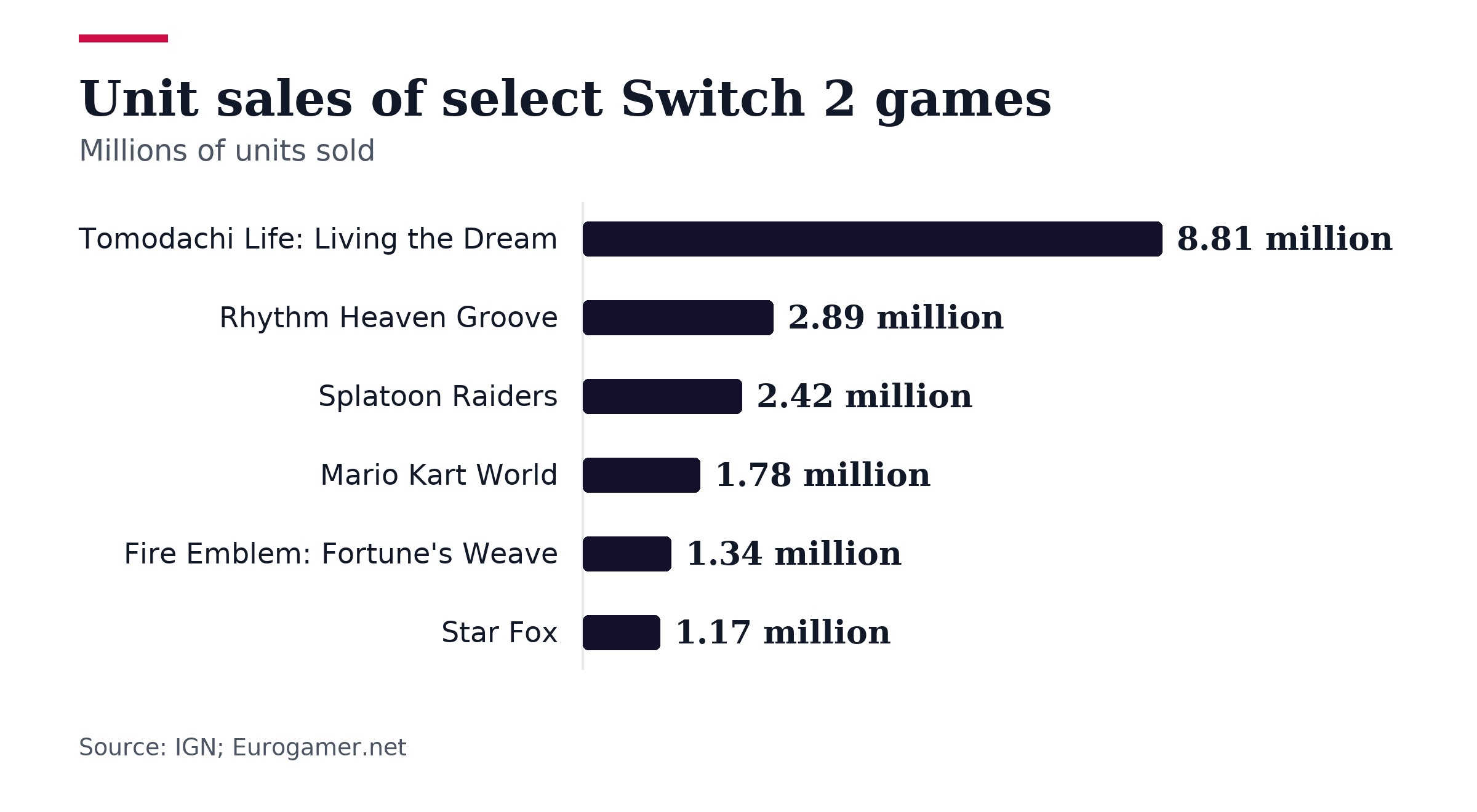
The Star Fox remake sold 1.17 million units worldwide, placing it ninth among Switch 2 games in Nintendo‘s financial data. It launched in June 2026 on Switch 2.
Switch 2 first-half sales totaled 6.49 million units, down from 10.36 million in the prior-year period. Lifetime sales reached 26.35 million units, keeping the console ahead of the original Switch on a launch-aligned basis. In the July-September quarter, hardware sales reached 2.67 million units, a 41 percent drop from the year before and below the 3.82 million sold in April-June 2026.
Nintendo’s operating profit fell 16 percent to 73.9 billion yen, about $467 million, in the three months to September 30, 2026, on a 15 percent sales decline. Net profit fell 29 percent to 73.5 billion yen, or $465.3 million, missing estimates of 82.2 billion yen. First-half net profit rose 11 percent, and operating profit climbed nearly 50 percent over the first six months on steady game sales and US tariff refunds. Nintendo kept its full-year net profit guidance at 310 billion yen.
The company has enough memory for its 16.5 million unit Switch 2 sales forecast for the financial year ending March 2027 and is not considering more price increases, Nintendo President Shuntaro Furukawa said. Nintendo increased the price of Switch 2 in September 2026 because of the ongoing RAMpocalypse, a memory-cost issue that also prompted Microsoft and Sony to raise their console prices. Nintendo shares rose 8.13 percent following the Ocarina of Time remake launch and financial report.
Serkan Toto, CEO of Kantan Games, called the Ocarina remake Nintendo’s only real blockbuster this fiscal year and urged more big-game releases. Some analysts have said missing blockbuster titles contributed to sluggish Switch 2 console sales, and investors remain worried about the memory situation and a lack of high-profile titles this year. “Nintendo’s only real blockbuster this fiscal year is the Ocarina Of Time remake,” Serkan Toto, CEO of Kantan Games, told CNBC.
Nate Bihldorff, Nintendo senior vice president of product development and publishing, said new games and remakes are of equal importance. He said remakes bring deep satisfaction to veterans and give newcomers a brand-new 2026 experience if they never played the original. Bihldorff also said he is excited about Donkey Kong Bananza at launch and that more games are always coming down Nintendo’s pipeline. Nintendo has not officially announced further remakes, though Majora’s Mask is a popular candidate and the game engine is ready.
The Ocarina of Time remake holds a Metacritic score of 96 out of 100 based on 80 reviews, with no mixed or negative feedback. Daily Mirror reviewed the game and awarded it 5 out of 5. Nintendo’s Switch 2 remake efforts have been positively received by fans and critics alike.
The original Ocarina of Time launched on Nintendo 64 in 1998 and earned a 99 Metacritic rating. The remake is part of the 40th anniversary of the Zelda saga.
Major cutscenes feature full voice acting for every character except Link and run longer than in the original. The remake adds side quests, extra lore, new characters, and the Hall of the Fallen Foes rematch area. The remake allows only one save per profile.
Nintendo altered some boss fights in the Ocarina remake by adding new attacks and animations. The hookshot can no longer attach to Kakariko Village rooftops, with grapple points now marked targets rather than natural features. Nintendo removed first-person aiming in favor of a third-person over-the-shoulder camera with optional gyro controls.
Great Fairies now charge hundreds of rupees for upgrades that were free in the original. The day and night cycle is longer and now runs in towns, with NPCs shifting between day and night positions in real time. At night, the drawbridge over Hyrule Field stays down instead of rising.
New features include fairy notes, Business Scrub Seeds, and Song of Storms holes. Mashable reviewer Alex Perry said the Switch 2 version is less difficult than the original. The Daily Mirror reviewer played the game during a preview session last month and initially found it slightly easier than the original.

Join the discussion