
Key facts
- Miyamoto became the first game developer to receive Japan's Order of Culture award.
- Journalists asked Miyamoto about AI during the press conference, and he gave a historical view comparing generative AI to the shift from typewriters to word processors.
- At Nintendo, there is a distinction between creating, which means coming up with the broader structure, and working, which means filling in gaps and polishing.
- At a public press conference after receiving the award, Miyamoto said he accepted the honor as a representative of everyone he worked with on his games.
Shigeru Miyamoto received Japan’s Order of Culture award on Oct. 23, 2026, becoming the first game developer to receive the honor, and discussed artificial intelligence at a public press conference afterward. The award is presented annually on Culture Day by the Japanese government on behalf of the Emperor to individuals whose cultural work has shaped the country’s image, and Miyamoto was among the honorees. The Order of Culture has existed since 1937 and recognizes significant impact on Japan’s art, literature, science, technology, or culture. The press conference followed the award ceremony and included questions from journalists, with remarks transcribed by Denfaminico Gamer.
Miyamoto said he accepted the honor as a representative of everyone he worked with on his games. Furthermore, he wanted to share the joy of the award with people at Universal Studios Japan and others in different fields he collaborated with on Super Nintendo World. He joined Nintendo in 1977 and reflected on almost 50 years at the company during the press conference. He described his time at Nintendo as a lucky life that let him influence the evolution of gaming.
When Miyamoto joined Nintendo, the company was most known for board games and playing cards played in the living room with friends and family. His development philosophy centers on shaping experiences around the living room and the people in that space, so games do not look out of place in the center of a person’s home. He said developing video games has always been about this living-room-centered approach. This living-room focus shaped his view of video games as experiences meant to fit naturally into a home.
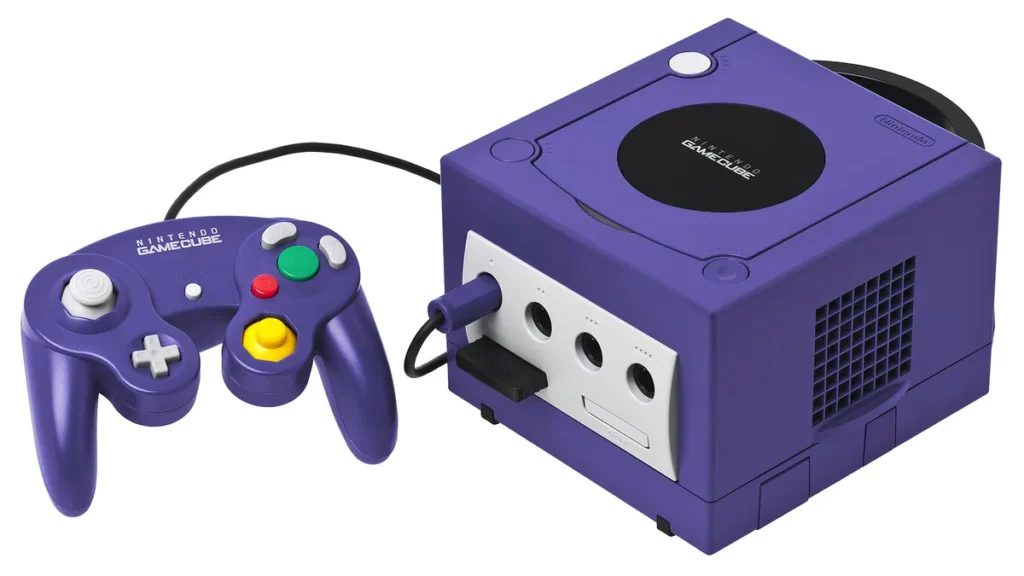
This philosophy influenced the development of the Wii, and Miyamoto said he worried about the industry and Nintendo during the shift from GameCube to Wii. Furthermore, he felt consoles were becoming more about power and that a divide existed between students who played video games and those who did not. He wondered whether the game controller had become too complex and off-putting for people playing games for the first time. He believed games should blend naturally into everyday life and have a positive effect on everyone.
Thanks to the Wii, Nintendo DS, and phones, gaming is more accessible than ever, aided by generations of people who grew up playing games now raising children. This broader access has made gaming a greater part of the cultural landscape.
Miyamoto’s perspective on film adaptations changed because fans’ love for Nintendo characters beyond gaming made the characters flexible enough for new mediums and theme parks. He was once opposed to films because he designed characters specifically for games and believed a movie cannot replicate interactivity.
Journalists asked Miyamoto about AI during the press conference, and he gave a historical view comparing generative AI to the shift from typewriters to word processors. He believes generative AI represents a similar shift to earlier tool evolution, weighing the technical merits of AI against artistic concerns about over-reliance on the technology. He said the change resembles how computers advanced and made a designer’s true individual capabilities more important.
Miyamoto said designers once learned lettering in school and that skill alone made someone a designer, even if they only adapted overseas designs into Japanese. As computers and word processors evolved, tools took over technical aspects and individual design abilities such as layout came to the forefront. He believes generative AI represents a similar shift in design. He used this to illustrate how tools once defined design before automation handled technical aspects.
At Nintendo, there is a distinction between creating, which means coming up with the broader structure, and working, which means filling in gaps and polishing. Miyamoto said working is actually fun and provides the satisfaction of creating.
Miyamoto said the labor involved in creation can be enjoyable, which is dangerous if creators assume just creating something is enough. He said the act of creation is inherently satisfying but that satisfaction in labor can mislead developers about quality. He warned that the fear comes when someone becomes content with their work and mistakes that for having made something good. This danger applies when creators enjoy the labor too much.
Miyamoto said the more AI takes over tasks, the more it becomes an opportunity to think deeply about what it means to create, which he called a good thing. He also said the more AI replaces tasks, the more it provides a chance to reflect on what matters, and he views that as positive.
Miyamoto said designs made merely by copying and pasting do not endure, and that a design is a person’s individual intention to make something while a computer assists. He said work that stands the test of time is not created merely by copying and pasting, and that individual intent is more important than ever. The process relies on an individual’s intent with the computer as an assistant for labor.

He said gaming is not only about technical development and tactile fun but also about what passes between developer and player. He said it is ultimately how and why you create that matters most.
“I don’t know how far AI will evolve, or whether a day will come when it handles everything, including the act of creating.” – Shigeru Miyamoto He concluded his AI comments with this uncertainty and belief in remaining human work.
TheGamer reported that Miyamoto believes people will always retain a role even if AI eventually handles everything. The outlet said Miyamoto does not see AI as a major worry and believes the human spirit will remain just as important. The article contrasted industry AI adoption with Miyamoto’s confidence in human creativity.
Metro reported that generative AI has been a hot button issue in the games industry over the past few years and can speed up development while posing an uneasy threat to artists and designers. Some companies have embraced generative AI more than others, citing Epic Games‘ pursuit of an AI-driven Marvel and Star Wars shooter. It is unclear whether Nintendo is using generative AI to help make games.
Nintendo CEO Shuntaro Furukawa acknowledged the problematic elements of generative AI in a 2024 statement but did not rule out its use entirely. This shows Nintendo’s prior cautious public stance on AI. Capcom uses generative AI to improve development efficiency and productivity and to streamline routine tasks, but will not implement assets generated by AI into its games. The article presented Capcom’s approach as an example of Japanese developer AI use.
Metro said Masahiro Sakurai primarily sees generative AI as a backwards-looking technology that can only create reproductions. Sakurai said the volume of games will increase thanks to AI but most will be unprofitable titles. He made this comment in an interview with Japanese outlet Denfaminicogamer. Sakurai’s view was presented as similar in nuance to Miyamoto’s response.
Sakurai said AI could easily replicate simple puzzle games now and may eventually recreate complex titles like Ico or Shadow of the Colossus, but cannot create Fumito Ueda’s future games. He said only Ueda can create those future games. Sakurai said AI refers to things created so far but cannot refer to things not created before, and he thinks this is true for various kinds of creative works. He linked this to the importance of human creativity in an era of mass production.
Sakurai said people who forge their own path and create their own unique flavor will become increasingly important in an era of mass production and low-quality goods. “I think that’s where human creativity lies,” Sakurai said. He did not call them pioneers but said they will matter more.
TheGamer reported that AI tools have become so powerful over the past few months that AI-assisted mods are becoming invaluable for game development. The article described this as a sudden tidal wave and expressed worry about open floodgates. TheGamer reported that if anyone can use Claude to pump out free browser ports, full development teams will inevitably rely on AI tools more.
TheGamer said Miyamoto and likely Nintendo are aware AI is becoming more prevalent in game development and could replace most hard work in creation. It also said AI will not be the only thing going into a game and cannot match the importance of individual creativity and effort. The article concluded that AI cannot equal human creativity and effort. The article framed human creativity as irreplaceable even if AI handles much of the work.




Join the discussion