
Key facts
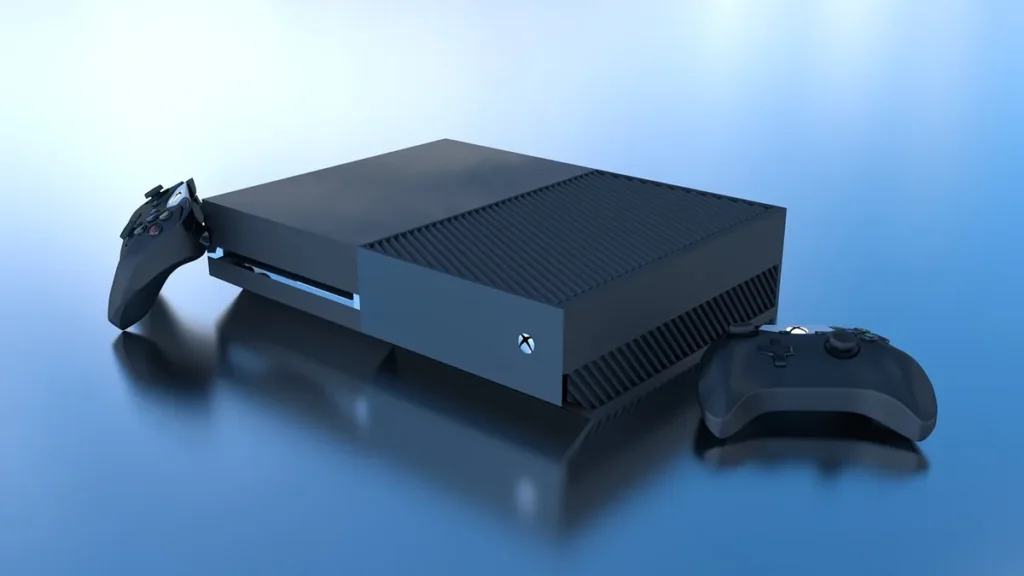
- Project Helix is designed as a hybrid system that blends PC and traditional console characteristics.
- Microsoft aims to keep the Project Helix retail price under $1,000.
- Xbox appears to have confirmed a change to the current Xbox Series X controller intended for the next-generation Xbox controller.
- The described change is subtle, not a major redesign.
Xbox appears to have confirmed a subtle redesign of the Xbox Series X controller for its next-generation console. The change involves a new font style for the face buttons X, Y, B, and A, matching the design seen on the leaked Xbox Elite Controller 3 and the officially revealed Xbox Nano controller.
This matching font style suggests a broader redesign of the face buttons for the upcoming next-generation Xbox controller. The new button design has a sleeker, more modern look that deviates from the original Xbox button aesthetic.
Fan reaction to the new design is divided. Some users describe the letters as weak and frail, while others praise the sharp, modern appearance. One fan remarked, ‘I don’t know how to explain it, but the letters look weak and frail.’ Another stated, ‘I’m not a fan; it needs to be bolder.’
While the Project Helix controller is likely to use the same button design, no guarantee has been provided. Microsoft has officially confirmed that Xbox Project Helix, its next-generation gaming console, will launch in November 2027. The system is designed as a hybrid, blending PC and traditional console characteristics.
Microsoft aims to keep the retail price under $1,000. The console will feature an AMD RDNA 5 GPU delivering high-performance computing, capable of handling native 4K resolution at 120 frames per second. Additionally, it includes a neural rendering chip for AI-driven enhancements in resolution and frame rates.
The console will be compatible with a wide range of peripherals, including various controllers, keyboards, and mice. It will support PC game libraries such as Steam, Ubisoft Connect, EA Play, Epic Games Store, and GOG, marking the first time an Xbox console natively supports games from both the Xbox ecosystem and third-party PC storefronts.
Production of Project Helix is scheduled to begin in spring 2027, with Microsoft planning to showcase the console publicly during Xbox’s 25th anniversary celebrations in late 2026. The custom AMD SoC powering Project Helix uses the RDNA 5 GPU architecture, built on TSMC’s 3nm process node, and incorporates up to 68 compute units, each roughly 65% faster than prior units.
The SoC is paired with a clock speed of at least 2.5 GHz and plans for 48GB of GDDR7 memory on a 192-bit bus, with a possible 36GB variant depending on RAM prices. Integrated into the SoC are a neural processing unit capable of up to 110 TOPS in a 6W power mode or 46 TOPS in a 1.2W mode, as well as Radiance Cores for ray and path tracing.
Neural Arrays group GPU compute units to work as a unified AI engine for better upscaling and denoising. A software layer called Universal Compression will compress data of all types in the graphics pipeline to boost memory bandwidth. Microsoft describes Project Helix’s ray tracing performance as an ‘order of magnitude leap’ over the current generation.
The console is expected to be disc-less, following Sony’s discontinuation of PlayStation discs. Project Helix will maintain backward compatibility with four full console generations, and Microsoft is introducing a Unified Game Development Kit to allow studios to ship a single build reaching both console and PC players.
The user interface is being built around an evolved version of the Xbox Full Screen Experience, similar to that on ASUS ROG Xbox Ally handhelds. Microsoft will roll out Xbox Mode for Windows 11 starting April 2026 in select markets as a preview of the Project Helix interface.
Microsoft is preparing the console to function as a Windows 11 gaming PC in all but name, able to run existing Xbox One, Xbox Series X|S, and other backward-compatible Xbox games. The Xbox interface will work alongside Windows 11, allowing users to exit to Windows and run other PC programs.
Details such as price remain in flux due to hardware manufacturing factors like memory shortages. AMD is supplying a semi-custom SoC for the system, and Microsoft has stated that Project Helix is co-designed for the next generation of DirectX. AMD’s FSR Diamond upscaling and frame generation stack has been confirmed for the system, announced at GDC 2026.



Join the discussion